About

I'm a second-year master's student at the Institute of Computing Technology, Chinese Academy of Sciences. My earlier work focused on multimodal models and dataset distillation. I now focus on LLM agents, especially search agents, self-evolution, and long-horizon tasks. I've worked in both academic labs and industry teams, and welcome ideas and collaborations. Outside of research, I enjoy playing volleyball.

Current role

Search Algorithm Intern · ByteDance / TikTok Tako

Sep 2026 – Present

Building LLM-based agents for the comment section in TikTok Search.

News

  • Joined ByteDanceSearch Intern · TikTok Tako
  • Two papers acceptedat NeurIPS 2026.
  • One paper acceptedat ICLR 2026.
Earlier news
  • — One paper accepted at Transactions on Machine Learning Research.
  • — Joined Xiaohongshu as a Research Intern, working on Agentic Search.
  • — One paper accepted at Neural Networks.

Publications

  1. NeurIPS 2026

    Knowledge-Graph Paths as Intermediate Supervision for Self-Evolving Search Agents

    Wu H, Liu J, Wei X, Gao Y, Wu Y, Hu Y. Advances in Neural Information Processing Systems, 2026. First Author · CCF-A

  2. NeurIPS 2026

    When Language Overrules: Revealing Text Dominance in Multimodal Large Language Models

    Wu H, Tang M, Zheng X, Su D, Jiang H. Advances in Neural Information Processing Systems, 2026. First Author · CCF-A

  3. ICLR 2026

    Diffusion Models as Dataset Distillation Priors

    Su D, Wu H, Chen H, Shi Y, Wang Y, Ye X, Zhu J. The Fourteenth International Conference on Learning Representations, 2026. Second Author

View 5 earlier publications
  1. TMLR 2025

    Dataset Condensation with Color Compensation

    Wu H, Su D, Hou J, Li G. Transactions on Machine Learning Research, 2025. First Author

  2. Neural Networks 2025

    LLM-Led Vision-Spectral Fusion: A Zero-Shot Approach to Temporal Fruit Image Classification

    Wu H, Jia B, Yuan X M. Neural Networks, 2025: 108155. First Author · CCF-B

  3. Applied Soft Computing 2024

    A generalized Lorenz system-based initialization method for deep neural networks

    Jia B, Guo Z, Huang T, Guo F, & Wu H. Applied Soft Computing, 2024, 167: 112316. Last Author · 中科院一区TOP

  4. ESWA 2024

    Chaos theory meets deep learning: A new approach to time series forecasting

    Jia B, Wu H, Guo K. Expert Systems with Applications, 2024, 255: 124533. Co-First Author · 中科院一区TOP

  5. IJCNN 2024

    Early-Late Dropout for DivideMix: Learning with Noisy Labels in Deep Neural Networks

    Wu H, Jia B, Sheng G. 2024 International Joint Conference on Neural Networks. IEEE, 2024: 1–8. First Author · CCF-C

Projects

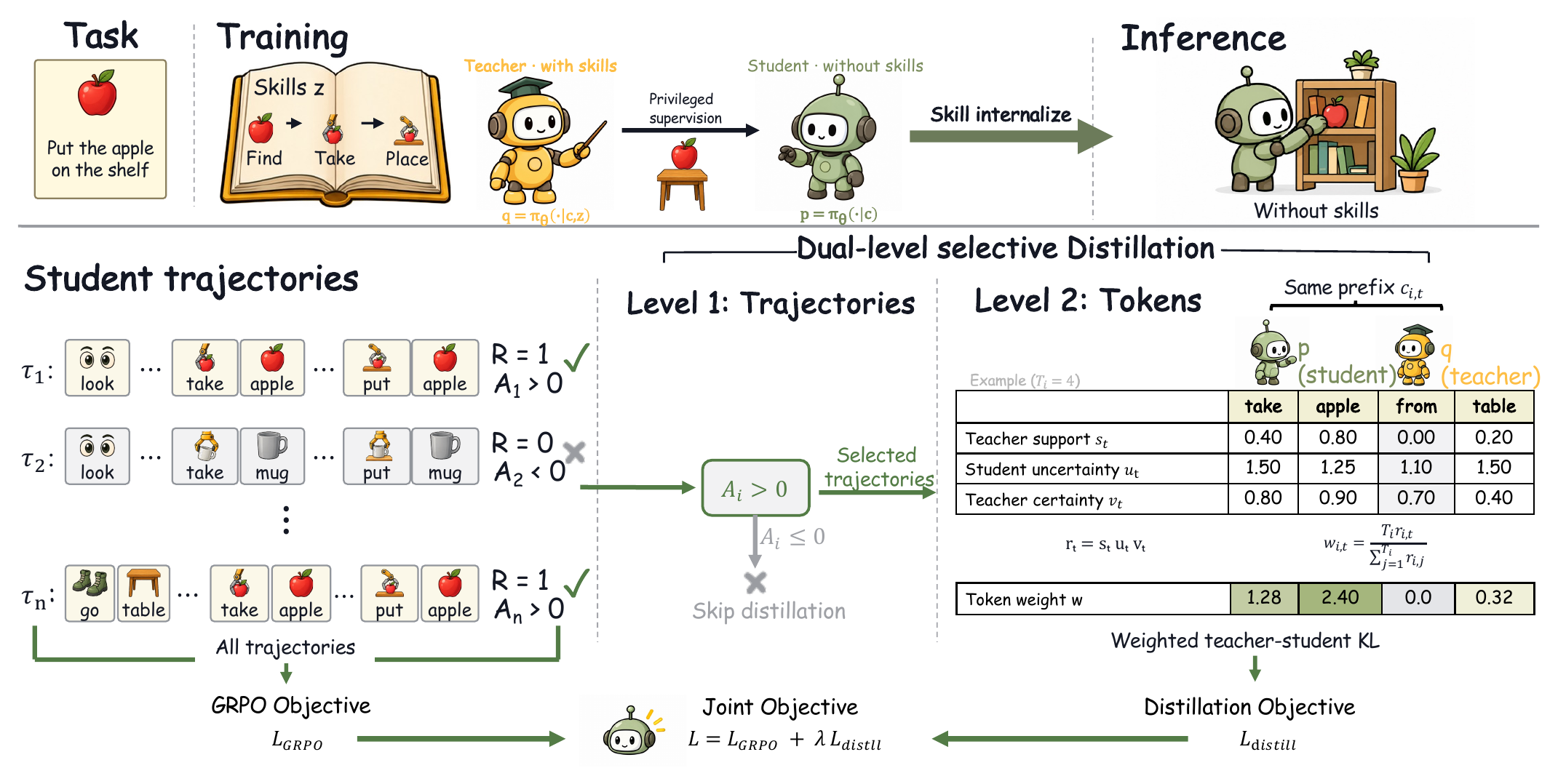
DL-OPSD framework: skill internalization through trajectory-level selection and token-level weighting

DL-OPSD: Dual-Level Selective On-Policy Self-Distillation for Skill Internalization

2026.05 – 2026.09 Under review

When self-guidance and execution feedback disagree, how should a model learn from itself?

DL-OPSD selects positive-advantage trajectories for auxiliary distillation and weights teacher-supported tokens according to student uncertainty and teacher certainty. Reinforcement learning uses all trajectories, and the student requires no skill access at inference.
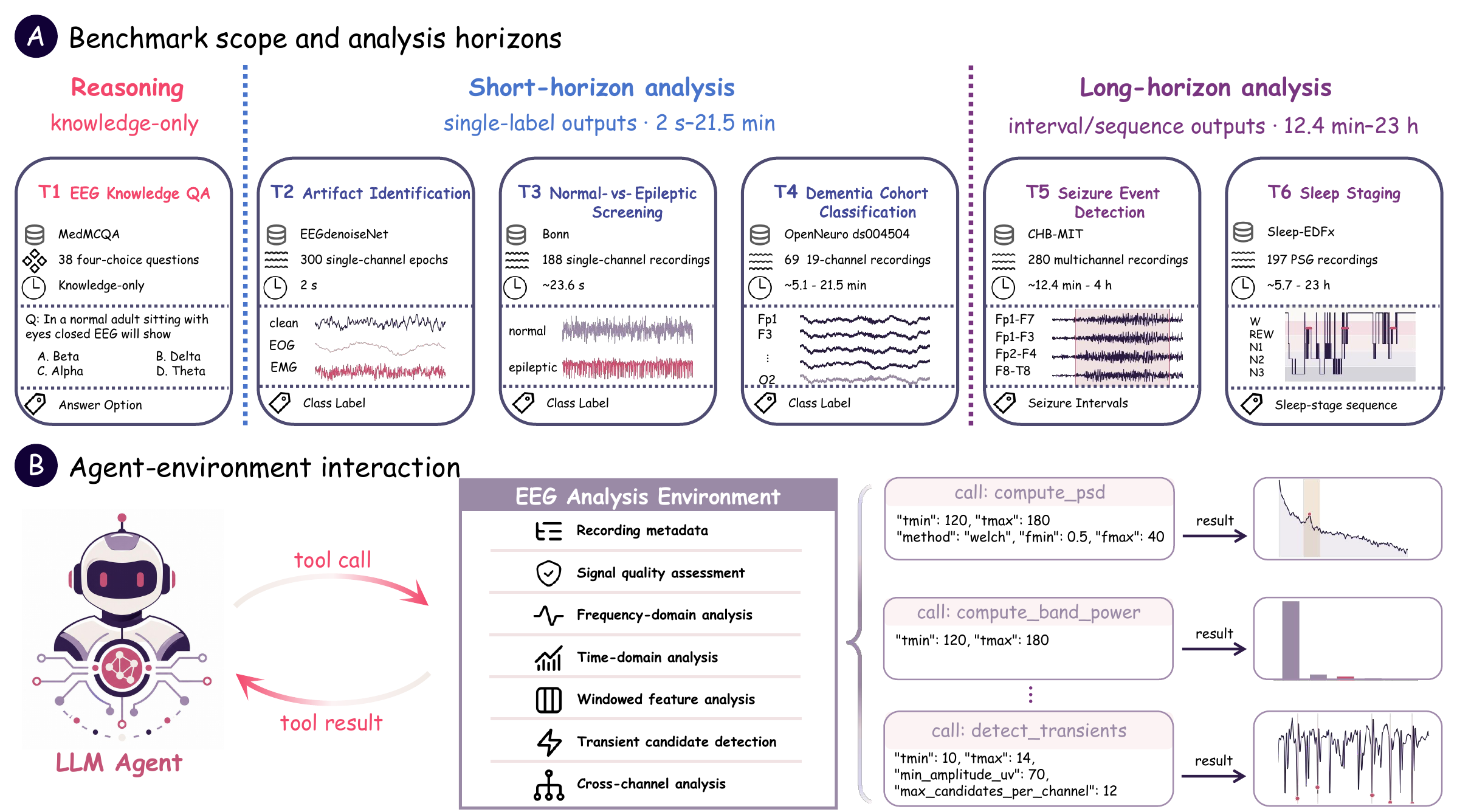
EEGAgentBench overview: six EEG analysis tasks and the agent-environment interaction

EEGAgentBench: Benchmarking LLM Agents on Short- and Long-Horizon EEG Analysis

2026.05 – 2026.09 Under review

Can LLM agents autonomously reason over EEG signals, select appropriate signal-processing tools, and construct effective analysis workflows across diverse tasks?

EEGAgentBench evaluates these capabilities through six tasks and 10 deterministic EEG analysis tools, with recordings ranging from 2 seconds to nearly 23 hours. Evaluation of 29 LLMs reveals substantial limitations in sustained evidence accumulation and multi-step reasoning for long-horizon EEG analysis.

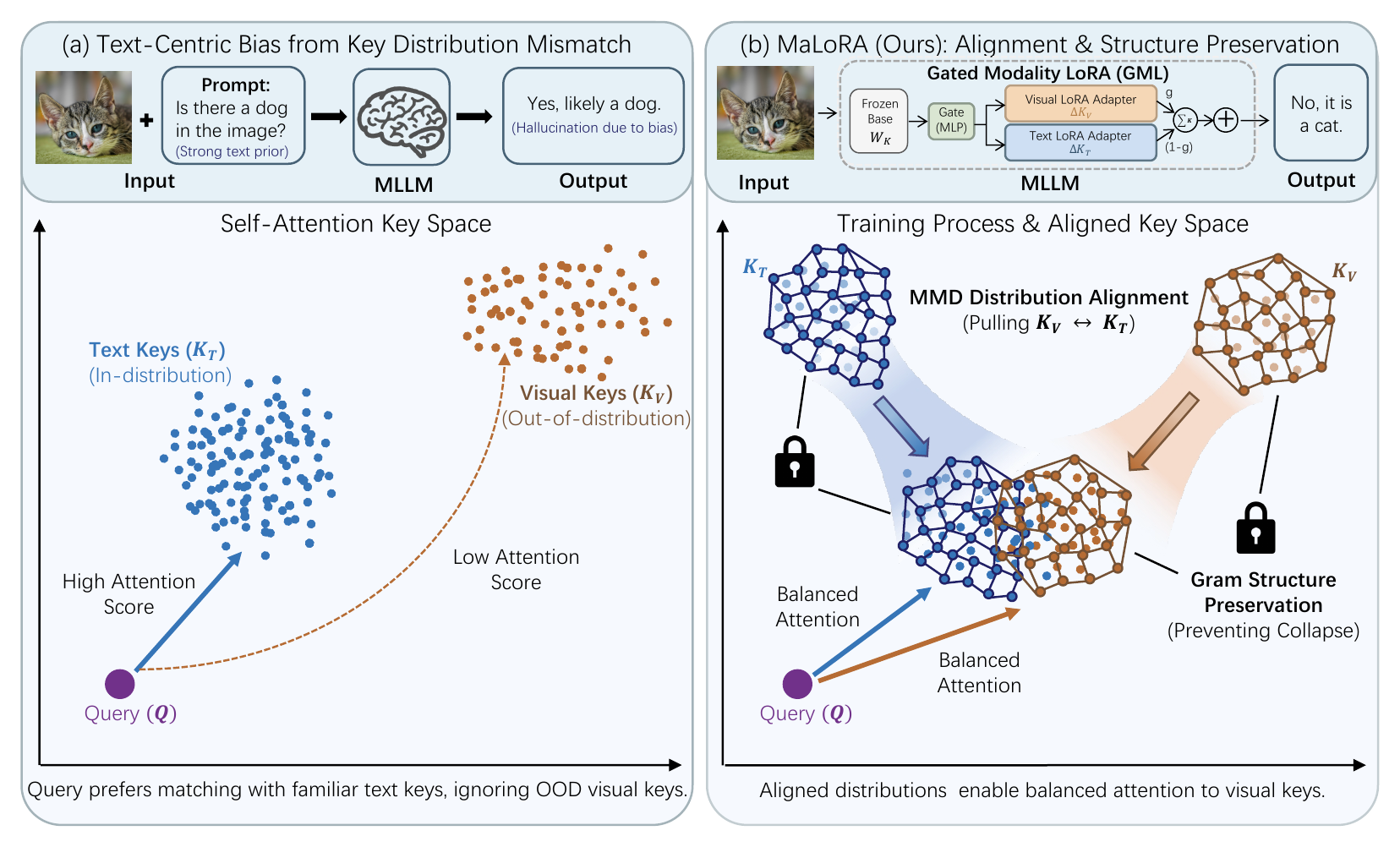
MaLoRA framework: aligning visual and textual keys while preserving modality-specific geometry

MaLoRA: Mitigating Text-Centric Bias in Multimodal Large Language Models through Key-Space Alignment

2025.10 – 2026.01 Under review

We hypothesize that text-centric bias stems from key-space distribution misalignment in decoder self-attention.

MaLoRA combines modality-aware gated key adaptation, multi-kernel MMD alignment, and Gram-reference regularization to reduce cross-modal discrepancy while preserving modality-specific geometry. Across multiple MLLM backbones, it improves robustness to text-dominant failures, with its clearest gains on hallucination-sensitive benchmarks.

VEX Robotics Competition VEX Robotics Competition team

VEX Robotics Competition

2018.09 – 2019.09

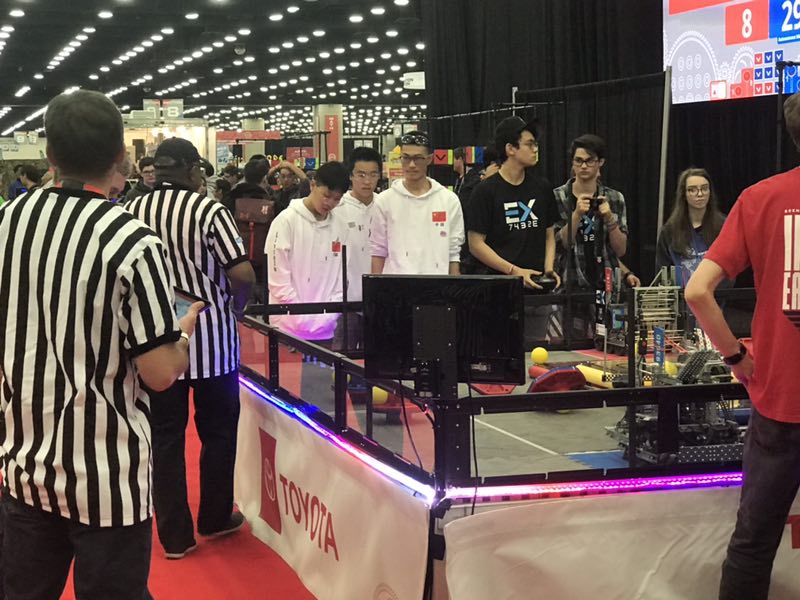
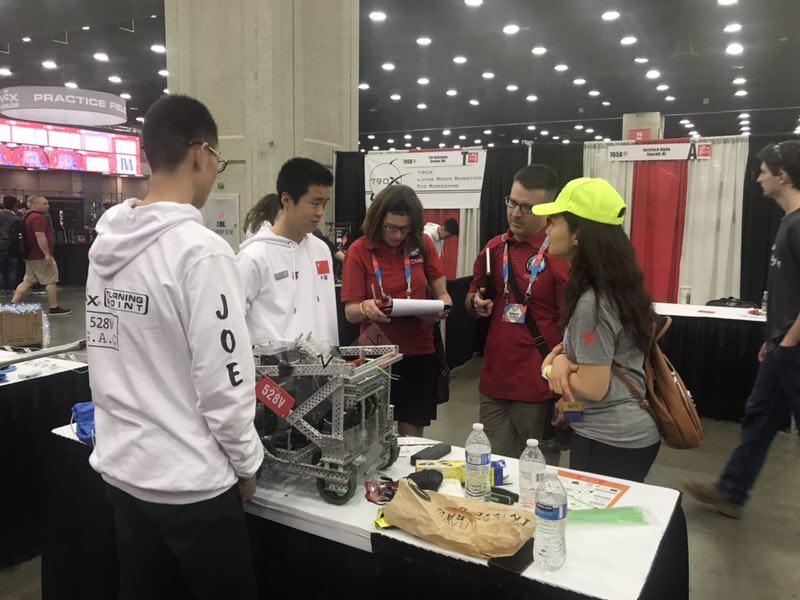
Led the school's VEX Robotics club, responsible for programming and debugging of the robotic systems. Attained Gold Awards at China Zone Selections, the Asia Championships, Asia Open and the World Championships in the United States during the 2018 season.

Experience

  • ByteDance / TikTok Search Tako

    Search Algorithm Intern

  • Xiaohongshu (Beijing)

    Search Algorithm Intern

  • Tsinghua University · TSAIL

    Intern

  • National University of Singapore

    Research Assistant · Institute of Operations Research and Analytics

  • Sichuan University

    Research Assistant · Machine Intelligence Lab

Education

  • University of Chinese Academy of Sciences

    M.S. · Institute of Computing Technology

  • Sichuan University

    B.S. · College of Computer Science

  • Sichuan University

    Business Administration · Business School

Honors & Awards

  • Huang Qianheng Scholarship.
  • Champion, 3rd Youth Campus Volleyball League of Sichuan Province.
  • Second Prize, Asia-Pacific Undergraduate Mathematical Contest in Modeling.
  • Third Prize, 2nd Youth Campus Volleyball League of Sichuan Province.

Academic Services

Conference Reviewer: IJCNN 2024, ACL 2024, CaLM @NeurIPS 2024, ICLR 2025, AAAI 2026, ICME 2026, ACMMM 2026

Journal Reviewer: IEEE Transactions on Neural Networks and Learning Systems(IEEE TNNLS), Journal of Supercomputing

Visitor Map